Skip to content
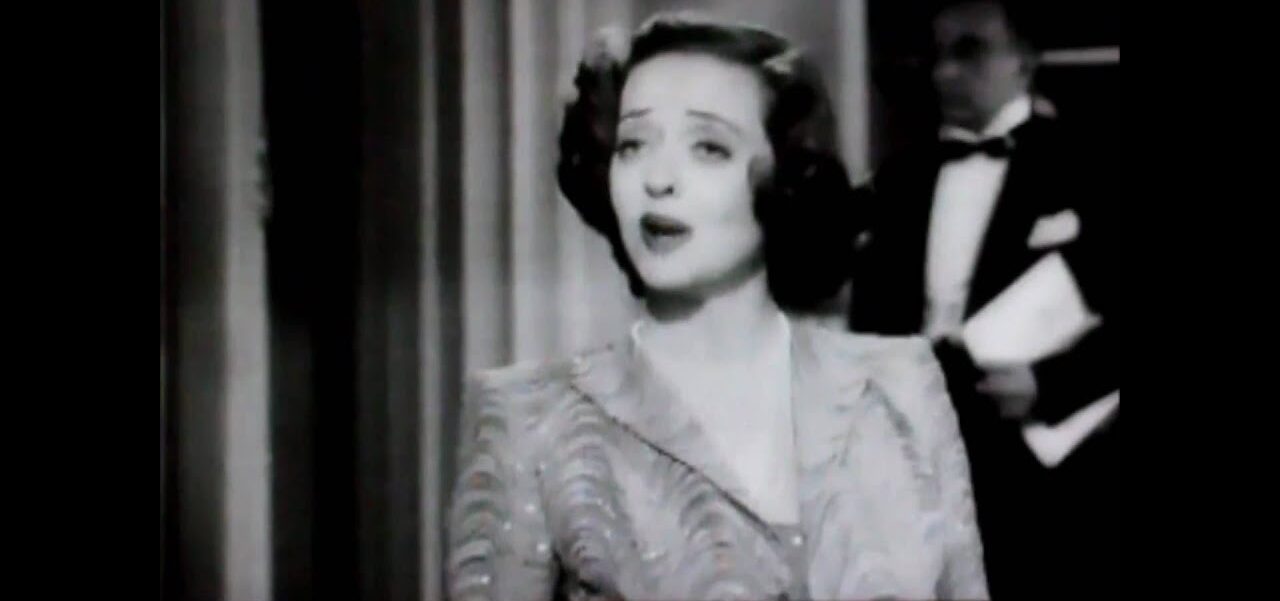
Song lyrics to I'm Goin' North (1943). Music by Arthur Schwartz, Lyrics by Frank Loesser. Performed by Jack Carson and Alan Hale in Thank Your Lucky Stars

I’m Goin’ North [song lyrics]

Song lyrics to I’m Goin’ North (1943). Music by Arthur Schwartz, Lyrics by Frank Loesser. Performed by Jack Carson and Alan Hale in Thank Your Lucky Stars

Weren’t you on the bill with me
In Dallas?
Or was it the Palace?
Or was it the Strand?

Old Folks at Home [song lyrics]

  • by

Song lyrics to Old Folks at Home, (1851) aka Swanee River. Music by Stephen Foster.

Old Folks at Home/Swanee River has been performed in:

Horror of Dracula

  • by

Horror of Dracula (1958) starring Christopher Lee, Peter Cushing

Christopher Lee and Peter Cushing bring the Horror of Dracula to vivid, full-color death in this retelling of Bram Stoker’s tale. Dracula (Lee), a centuries-old Transylvanian nobleman damned to an eternal half-life, regularly finds new victims. He also finds Dr. Van Helsing (Cushing), a scientist who becomes the Count’s implacable foe in a deadly game of bat and mouse.

The Dreamer [song lyrics]

  • by

Song lyrics to The Dreamer (1943). Music by Arthur Schwartz, Lyrics by Frank Loesser. Sung by Dinah Shore in Thank Your Lucky Stars

The Dreamer is a song about a farm girl waiting for her soldier boyfriend to return home after World War II. In Thank Your Lucky Stars, it is firstsung by Dinah Shore. Later, it’s comically reprised by Olivia de Havilland, George Tobias, and Ida Lupino.

Doctor Who – The Three Doctors

  • by

Doctor Who – The Three Doctors, starring Jon Pertwee, Patrick Troughton, William Hartnell, Katy Manning, Nicholas Courtney

In The Three Doctors, The Time Lords are in crisis. A powerful force is draining their energy into a mysterious Black Hole … And they’re forced to recruit the Doctor to save them. But one Doctor isn’t enough for this mission. All three of the Doctor’s incarnations, aided by Jo Grant and UNIT, must face the wrath of Omega. He’s an ancient Time Lord trapped in a universe of anti-matter, with one thing on his mind: Escape. Which soon turns to revenge …

Smokey and The Bandit

  • by

Smokey and The Bandit (1977) starring Burt Reynolds, Sally Fields, Jackie Gleason, Jerry Reed

One of the all-time big box-office hits, Smokey and the Bandit stars Burt Reynolds and Jackie Gleason in an outrageous comedy that boosts full-throttle laughs and high-velocity thrills. Reynolds is the Bandit, a king-of-the-road trucker hero who accepts the ultimate challenge: pick up a truckload of Coors beer in Texarkana – the closest place it can be legally sold – and haul it cross-country to Atlanta in 48 hours. The reward? $80,000! The result? The wildest series of car chases and crashes ever filmed in this hilarious all time box office smash

Leviathan [monster movie]

  • by

Leviathan (1989) starring Peter Weller, Ernie Hudson, Hector Elizondo, Richard Crenna

In Leviathan, A group of deep-sea miners discover a sunken Russian submarine. It contains a genetics lab, which apparently had created a monster. It slips onto their own ship and they must try to destroy it as it picks them off, one by one. Often described as “Alien in the ocean,” it captures much of the suspense of the space thriller.

Give My Regards to Broadway [song lyrics]

Song lyrics to Give My Regards to Broadway (1904). Music by George M. Cohan

Give My Regards to Broadway is a song written by George M. Cohan for his musical play Little Johnny Jones which debuted in 1904 in New York.

Cohan, playing the title character, sings this song as his friend is about to sail to America, looking for evidence aboard the ship that will clear his name for allegedly throwing the English Derby. He is sure he’ll become a star at Broadway, therefore signing off with: Give my regards to Broadway.

Now’s The Time To Fall In Love [song lyrics]

  • by

Song lyrics to Now’s the Time to Fall in Love (1931). Music by Al Sherman, Lyrics by Al Lewis. Performed by Eddie Cantor in Thank Your Lucky Stars

Now’s The Time To Fall In Love is a song from the Depression era. It was made popular by Eddie Cantor on his weekly radio show, and also used in the popular 1953 movie, The Eddie Cantor Story.

Exit mobile version